Gyratory Crusher demand is closely linked to global mining investment, especially in copper, iron ore, gold, and other hard-rock operations. The U.S. Geological Survey’s Mineral Commodity Summaries 2024 reports global copper mine production of approximately 22 million metric tons in 2023. Iron ore production remained above two billion metric tons. These figures show why primary crushing capacity still matters in large mines.
Market research reports from Grand View Research and Fortune Business Insights identify mining expansion, infrastructure spending, and equipment replacement as major growth factors. Their market estimates differ, however. Definitions, regions, and product categories are not always consistent. That detail deserves attention. Buyers should not treat one forecast as absolute truth.
A modern Gyratory Crusher can process enormous feed sizes before material reaches secondary crushing. Picture a haul truck unloading blasted rock into a wide, dust-covered feed opening. The machine must then operate continuously, often under severe vibration, moisture, and abrasive conditions. Manufacturer selection therefore requires more than comparing purchase prices.
This guide examines leading Gyratory Crusher manufacturers for global buyers. It considers installed experience, throughput design, wear-part availability, automation, energy use, and regional service support. Metso, FLSmidth, and thyssenkrupp have established reputations in large-scale mineral processing. Other suppliers may offer competitive engineering or localized support. Performance depends on the mine.
Technical credibility also requires careful verification. Buyers should request reference plants, test-work results, maintenance records, and lifecycle-cost calculations. A low initial price can become expensive when liners, bearings, or specialist technicians are difficult to obtain. Some available data remains incomplete, especially for private manufacturers. That limitation should be acknowledged. Reliable decisions come from comparing verified specifications with the site’s actual ore, capacity, climate, and operating schedule.
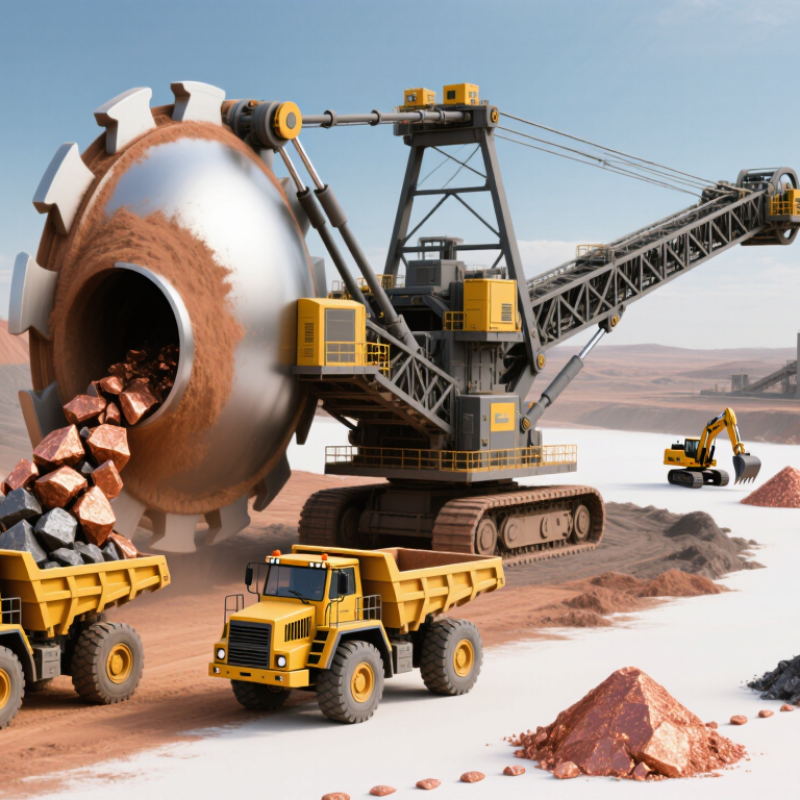
Top Gyratory Crusher Manufacturers for Global Buyers
Gyratory crushers serve as primary machines for reducing large rocks in mines and quarries. Their steep crushing chamber accepts blasted material with fewer interruptions than many compression crushers. A mantle moves eccentrically inside a fixed concave surface. As the mantle approaches the concave, rock is compressed and fractured. When it moves away, crushed material falls through the lower opening.
The mainshaft, spider assembly, hydraulic system, and lubrication circuit control reliable operation. A suitable design must match feed size, rock strength, moisture, and required capacity. Continuous, controlled feeding usually improves power use and product consistency. However, higher capacity does not always mean better performance. A poorly matched chamber can increase wear, vibration, and downtime. Operators should inspect the mantle and concave regularly, especially after changes in blasting conditions. Small feed variations can affect the crushing zone more than expected.
Tips: Confirm the maximum feed size before comparing machines. Check the closed-side setting under actual operating conditions. Monitor oil temperature, pressure, vibration, and unusual noise. Keep records of liner wear and production changes. These details help buyers evaluate equipment beyond catalogue figures. A realistic site test is valuable, because laboratory results may not reflect sticky material, uneven feeding, or abrasive rock. Good maintenance experience also matters. Even a well-designed crusher can perform poorly when inspections are rushed or lubrication intervals are treated as optional.
Global buyers should evaluate gyratory crusher manufacturers through verified operating evidence, not brochures alone. The U.S. Geological Survey reported about 1.5 billion metric tons of crushed stone production in 2023. That scale makes reliability, throughput, and maintenance access commercial priorities. Request test results showing capacity, product size, power draw, and availability under comparable ore conditions. A machine that performs well in soft rock may struggle with abrasive, wet feed.
Look for engineering depth across the complete circuit. Check whether the manufacturer calculates feed opening, closed-side setting, liner wear, and foundation loads for your site. Ask for documented energy data from factory or field trials. The International Energy Agency continues to identify mining as an energy-intensive sector, so even small efficiency gains can affect long-term operating costs.
Energy figures need context. Fresh liners can distort early results.
Service capability deserves equal scrutiny. The supplier should provide regional spare-parts planning, remote diagnostics, shutdown procedures, and trained technicians. Confirm response times in writing. Review warranty exclusions carefully. ISO 9001 certification can support process consistency, but it cannot replace customer references or inspection records. Visit an operating installation when possible. Ask operators what failed first. Their answers may be uncomfortable, yet useful. A weak point often appears after several thousand hours, not during commissioning. Manufacturers that disclose limitations usually earn more trust than those promising uninterrupted performance.
Leading manufacturer profiles should begin with engineering capability, not marketing language. Established suppliers typically offer primary gyratory crushers for large mines, quarrying operations, and hard-rock applications. Their product ranges may include different chamber profiles, eccentric arrangements, and automated lubrication systems. Site experience shows that feed size, moisture, abrasiveness, and maintenance access strongly influence real performance.
Fit matters. The U.S. Geological Survey reported approximately 1.5 billion metric tons of crushed stone production in 2023. This scale demonstrates why buyers demand stable throughput and predictable wear costs. Leading manufacturers usually provide equipment simulations, installation guidance, condition monitoring, and replacement-part planning. More advanced packages can track power draw, vibration, and mainshaft position. These details help operators detect abnormal loading before an expensive shutdown occurs.
Independent testing remains essential. Buyers should compare open-side settings, rated capacity, installed power, product gradation, and liner life under similar conditions. Published capacity figures are not always comparable. That is an uncomfortable weakness in many procurement studies.
The Global Mining Guidelines Group recommends stronger attention to data quality, maintenance planning, and lifecycle risk in mining projects. Reliable suppliers therefore support factory acceptance testing, commissioning records, and operator training. A capable manufacturer may not offer the lowest purchase price. Its advantage often appears later, through safer access, fewer unplanned stoppages, and clearer service decisions.
Global gyratory crusher buyers should assess regional coverage before comparing equipment specifications. A strong manufacturer maintains trained field engineers near major mining and quarrying zones. Local teams understand haulage limits, climate, electrical standards, and site safety expectations. That knowledge reduces commissioning delays and prevents costly assumptions. Service depth matters more than a polished brochure.
Ask how quickly technicians can reach a remote mine, and which tasks they can complete locally. Reliable networks provide installation supervision, condition inspections, vibration checks, and operator training. They also keep documented service records, escalation contacts, and clear response windows. In regions with limited technical labor, remote diagnostics can guide troubleshooting before a specialist arrives. However, remote support cannot replace hands-on inspection. No network is perfect. Weather, customs clearance, and difficult roads can still disrupt schedules. Buyers should request realistic response times, not optimistic averages.
Spare parts support needs equal scrutiny. Critical items include mantles, concaves, bearings, seals, drive components, and control-system parts. Regional warehouses can shorten downtime during a liner change or unexpected bearing failure. Ask about part identification, batch traceability, storage conditions, and compatibility with the installed crusher. A practical supplier should recommend a risk-based stock list, rather than sell every available component. This is where experience shows. Yet even experienced teams can misjudge demand after ore characteristics change. Monthly usage reviews and failure reports help correct that judgment. Compare warranty terms, training coverage, and parts lead times in writing.
| Evaluation Dimension | Global Buyer Requirement | North & South America | Europe & CIS | Asia-Pacific | Africa & Middle East |
|---|---|---|---|---|---|
| Primary Application | High-throughput primary crushing for hard rock, metallic ores, aggregates, and large open-pit operations. | Copper, iron ore, gold, oil sands, and large aggregate projects. | Iron ore, copper, polymetallic ores, quarrying, and underground-to-surface processing. | Iron ore, copper, coal, nickel, aggregates, and major infrastructure projects. | Copper, gold, platinum-group metals, phosphate, iron ore, and quarrying. |
| Typical Equipment Role | Fixed primary crusher positioned ahead of conveyors, stockpiles, secondary crushers, or grinding circuits. | Large fixed installations are common in high-capacity open-pit mines. | Frequently integrated with automated mineral-processing and plant-control systems. | Often specified for long operating hours and high annual tonnage. | Selected for remote sites where ruggedness and maintainability are critical. |
| Capacity Planning | Capacity depends on crusher model, feed size, closed-side setting, rock characteristics, moisture, and feed continuity. | Buyers commonly require duty-based sizing for very high daily production. | Energy efficiency and stable product flow are frequent selection priorities. | Capacity studies generally account for seasonal weather and variable ore hardness. | Design reviews commonly include haulage constraints and limited backup equipment. |
| Service Network Expectations | Local commissioning, field service, remote diagnostics, preventive maintenance, and technical training. | Strong demand for regional field technicians and mine-site shutdown support. | Emphasis on documentation, compliance, condition monitoring, and planned maintenance. | Service coverage often combines regional hubs with site-based maintenance teams. | In-country technical response and remote troubleshooting reduce remote-site downtime. |
| Critical Spare Parts | Concave segments, mantle, spider assembly components, mainshaft components, seals, bushings, bearings, and hydraulic parts. | Large mines usually maintain on-site inventories of wear parts and planned shutdown kits. | Inventory planning is commonly linked to maintenance schedules and traceability requirements. | Regional warehouses and consolidated shipments can help support dispersed operations. | Recommended stock levels are typically higher for remote mines with long logistics routes. |
| Wear-Part Selection | Liner selection should match abrasiveness, compressive strength, feed gradation, moisture, and target product size. | Abrasion-resistant solutions are important for hard, abrasive ores and long operating cycles. | Selection often focuses on consistent chamber performance and predictable liner life. | High-wear applications require regular liner monitoring and optimized change-out planning. | Wear-life forecasting is valuable where transport time and crane access affect maintenance. |
| Automation & Monitoring | Preferred functions include hydraulic setting adjustment, overload protection, lubrication monitoring, vibration monitoring, and remote data access. | Remote condition monitoring supports large sites with centralized operations centers. | Integration with plant-wide automation and safety systems is frequently required. | Digital monitoring helps manage high utilization and multiple production lines. | Remote diagnostics can reduce the need for frequent specialist travel. |
| Installation Support | Requires foundation review, structural checks, lifting plans, alignment, lubrication setup, electrical integration, and commissioning. | Site installation teams commonly coordinate with EPC contractors and mine owners. | Detailed engineering documentation and conformity records are important procurement factors. | Project schedules often require coordinated factory acceptance testing and staged delivery. | Pre-assembly and logistics planning can be decisive for isolated or infrastructure-limited sites. |
| Compliance Considerations | Machine safety, guarding, electrical safety, pressure systems, noise, dust, and local mining regulations must be reviewed. | Requirements vary by country, state, province, and mine jurisdiction. | European conformity, machinery safety, and workplace-risk documentation may apply. | National standards, project specifications, and owner engineering standards are commonly combined. | Tender documents often require compliance evidence suitable for mining and industrial permitting. |
| Best-Fit Supplier Profile | Proven primary-crushing experience, engineering capability, global support, documented references, and long-term parts availability. | Suitable suppliers should demonstrate local service capacity and established mining references. | Prioritize technical documentation, lifecycle cost analysis, and integration expertise. | Prioritize scalable production support, regional parts logistics, and commissioning resources. | Prioritize reliability, remote support, spare-parts availability, and practical site maintainability. |
| Recommended Buyer Checks | Verify duty calculations, reference installations, warranty terms, response-time commitments, parts interchangeability, and total cost of ownership. | Confirm field-service locations, emergency support procedures, and shutdown execution capability. | Check conformity documentation, software compatibility, and long-term technical records. | Review delivery routes, local inventory, training plans, and support for multiple time zones. | Confirm freight options, critical-stock recommendations, site access requirements, and specialist mobilization plans. |
Selecting the right gyratory crusher supplier starts with process fit, not catalog size. Share your feed gradation, moisture, abrasiveness, capacity, and target product size. The supplier should convert these details into a documented equipment calculation. Ask how the crusher handles peak loads, tramp material, and liner wear.
Proof matters. Request references from comparable mines or aggregate plants, preferably with similar rock conditions. Review production records, maintenance histories, and commissioning reports. A reliable supplier should explain its testing procedures, machining tolerances, and quality inspections.
Visit the factory when practical. Check weld quality, component traceability, and final assembly controls. Independent inspection can reveal weaknesses that polished brochures hide.
Service capability deserves equal attention. Confirm spare-part availability, response times, remote diagnostics, and technician coverage near your site.
Ask for a realistic installation schedule, training plan, and commissioning checklist. Compare total ownership cost, including power use, liners, foundation changes, and planned shutdowns. The lowest quotation may become expensive after one delayed part.
Some supplier claims sound precise but rest on untested operating conditions. A short site trial or verified reference can expose that gap before purchase.