Why Choose a Centrifugal Exhaust Fan for Your Business?
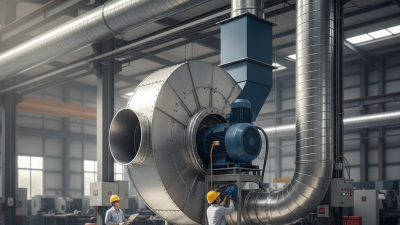
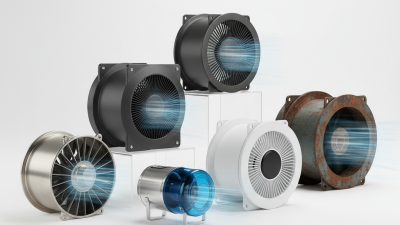
Choosing the right ventilation equipment can shape daily productivity, indoor comfort, and long-term operating costs. A Centrifugal Exhaust Fan offers dependable airflow for businesses handling heat, dust, moisture, or strong odors. Its curved blades move air efficiently through ductwork, even when resistance increases. That matters in commercial kitchens, workshops, warehouses, and processing areas.
Picture a busy kitchen at noon. Steam rises above cooking lines, grease collects near filters, and indoor temperatures climb quickly. A properly selected fan can remove contaminated air before it spreads through the workspace. In a workshop, it may help control fine dust and welding fumes when paired with suitable filtration and capture systems. Performance depends on more than motor power. Engineers should review airflow volume, static pressure, duct length, noise levels, installation space, and maintenance access.
Small details matter.
Experienced suppliers usually begin with an airflow assessment, not a product catalog. They may compare fan curves, energy ratings, materials, and control options before recommending a model. Local ventilation requirements and workplace safety rules should also guide the final design. A fan that looks powerful may perform poorly if the duct system is undersized or poorly sealed. This is an easy mistake to make.
No equipment solves every ventilation problem alone. Regular cleaning, belt inspection, bearing checks, and airflow testing remain essential. Business owners should also question optimistic efficiency claims and request documented performance data. With careful selection and realistic maintenance planning, a Centrifugal Exhaust Fan can support safer, cleaner, and more comfortable working conditions. But the design should fit the building, process, and people using it.

Centrifugal Exhaust Fans Explained: Typical Airflow of 1,000–100,000 CFM
Why Choose a Centrifugal Exhaust Fan for Your Business?
Centrifugal Exhaust Fans Explained: 1,000–100,000 CFM
Centrifugal exhaust fans suit facilities that need controlled air removal across changing conditions. Typical airflow ranges from 1,000 to 100,000 CFM. That range is wide. Small workshops may need around 1,000 CFM, while warehouses, processing areas, and large production floors require far more. The correct capacity depends on room volume, heat, dust, moisture, and required air changes.
A centrifugal fan can maintain useful airflow against duct resistance and static pressure. This matters when exhaust travels through long ducts, filters, dampers, or roof outlets. A fan rated at 20,000 CFM may deliver much less after installation if the system adds unexpected resistance. I have seen clean-looking layouts perform poorly because duct elbows were underestimated. The catalog number was accurate, but the application was not.
Selection should begin with measured airflow and calculated static pressure. Use an airflow hood, anemometer, or commissioning report where possible. Check motor capacity, operating temperature, impeller material, noise levels, and maintenance access. A 100,000 CFM system also needs careful balancing, strong supports, and reliable controls. Measure twice. Oversizing can waste energy and create excessive noise, while undersizing may leave stale air near workers or equipment. Seasonal changes can also alter performance, especially when filters load with dust.
Pressure Capability: Handling 1–30 in. w.g. in Ducted Exhaust Systems
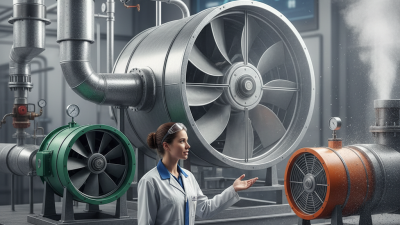
A centrifugal exhaust fan suits businesses that need steady airflow through resistant ductwork. Its pressure capability can cover roughly 1–30 in. w.g., depending on the selected fan, wheel, speed, and motor. This range supports systems with long ducts, multiple elbows, dampers, filters, or elevated discharge points. Axial fans may move high air volumes, but they often lose performance when resistance increases.
Pressure selection should begin with the complete duct system, not the fan alone. Measure the required airflow, then calculate friction losses through straight sections, fittings, grilles, and filtration equipment. Include dirty-filter conditions when appropriate. A fan operating at 10 in. w.g. may deliver very different airflow from one operating at 3 in. w.g. The fan curve must confirm the duty point. Guessing here becomes expensive.
I have seen installations where the duct layout looked simple, yet several tight elbows consumed unexpected pressure. A field reading later showed the system operating below its design airflow. The original estimate was not useless, but it was too optimistic. That is common. Leave practical margin without oversizing the motor or creating excessive noise. Verify pressure with calibrated instruments after installation, and check vibration, belt condition, damper position, and filter loading during operation. Small changes can shift the working point. In demanding exhaust systems, documented testing matters as much as the initial selection.
Fan Laws for Sizing: Q∝N, Pressure∝N², and Power∝N³
Why Choose a Centrifugal Exhaust Fan for Your Business?
A centrifugal exhaust fan suits facilities that need steady airflow against duct resistance. Its backward-curved or radial wheel can handle filters, elbows, and long discharge routes. The fan laws make speed changes powerful: airflow follows Q ∝ N, pressure follows N², and power follows N³. A 10% speed increase can raise airflow by about 10%, pressure by 21%, and power demand by 33%. These relationships assume similar operating conditions and constant air density.
The U.S. Department of Energy’s Improving Fan System Performance sourcebook reports that fan systems may consume 15–20% of industrial facility electricity. It also identifies meaningful savings through correct sizing, controls, and reduced system resistance. AMCA and ASHRAE guidance stress that selection must use the full fan curve, not airflow alone. In practice, a small pulley change can make a motor run hot. A neat equation is not a complete design. Actual leakage, dirty filters, temperature, and unstable system pressure can shift the result.
Tips: Record airflow, static pressure, temperature, and motor speed before selecting equipment. Start with the measured duty point. Then check the fan curve and motor service factor. Variable-speed control can reduce energy during low-demand periods, but oversizing remains a common mistake. For example, reducing speed by 20% may cut theoretical power to roughly 51% under the cube law. Field readings still matter, because real systems rarely behave perfectly.
Safety and Compliance: Applying AMCA 210 Testing and Motor Protection Standards
A centrifugal exhaust fan can support safer, more controlled workplace ventilation. For a business, the choice should begin with verified performance, not appearance or price. AMCA 210 testing provides a recognized method for measuring airflow, pressure, power, and fan efficiency. These results help engineers compare equipment under consistent laboratory conditions. Still, a test report is not a complete safety certification. That distinction matters.
Motor protection begins with correct sizing and installation. Overload protection should match the motor’s rated current and operating conditions. A local disconnect should be accessible near the fan. Proper grounding must also be verified before startup. If a variable-frequency drive is used, confirm motor compatibility, fault settings, and cooling performance. In dusty, wet, or corrosive areas, enclosure selection becomes critical. Installation records, inspection photos, and commissioning measurements improve traceability. Small omissions can become expensive failures. Real-world conditions often differ from the test room.
Tips: Ask for the AMCA 210 test basis and operating data. Check that airflow meets the actual duct resistance. Measure vibration and motor current during commissioning. Review protection settings with a qualified technician. Do not assume factory settings fit your building. A careful review may reveal an imperfect design before it becomes a safety concern.
Why Choose a Centrifugal Exhaust Fan for Your Business?
Safety and Compliance: Applying AMCA 210 Testing and Motor Protection Standards
Centrifugal exhaust fans can be evaluated using the air-performance test methods defined in AMCA 210. Motor protection must be selected separately according to the motor nameplate data and applicable electrical codes. The chart shows common maximum branch-circuit short-circuit and ground-fault protective device ratings listed in NEC Table 430.52 for squirrel-cage motors.
These percentages are based on motor full-load current. Overload protection is a separate requirement, and the final protective-device selection should be verified by a qualified electrical professional.