Top 5 Tips for Choosing Pm Synchronous Motor for Your Needs?
Choosing the right Pm Synchronous Motor can significantly impact the efficiency of your projects. Industry expert Dr. Michael Thompson, a renowned electrical engineer, once stated, "Selecting the right motor is as crucial as the application itself." His words resonate in today’s competitive landscape.
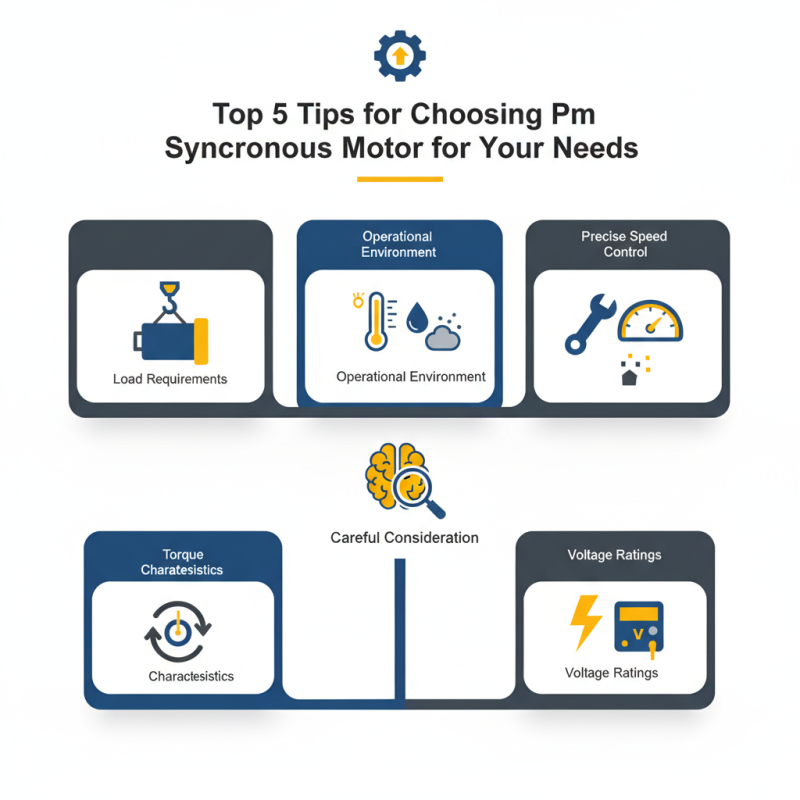
Understanding the core features of a Pm Synchronous Motor is essential. These motors offer high efficiency and precise speed control. However, many users overlook specific details during selection. For instance, considering load requirements and operational environment greatly influences performance. Users often rush to choose without evaluating their exact needs.
It is easy to underestimate the importance of each selection criterion. Ignoring factors like torque characteristics or voltage ratings can lead to suboptimal choices. Reflecting on what the Pm Synchronous Motor needs in real-world applications can lead to better results. A thorough understanding of your requirements makes all the difference in motor selection. The journey of choosing the ideal motor starts with awareness and careful consideration.
Understanding the Basics of PM Synchronous Motors
Permanent Magnet (PM) synchronous motors are known for their
efficiency and precision. They use permanent magnets embedded in the rotor, which interact with the stator’s
magnetic field. This interaction creates a torque that drives the motor. Understanding their design is
crucial for optimizing performance in your
specific application.
When selecting a PM synchronous motor, observe its torque-speed characteristics.
These motors provide high torque even at low speeds, making them suitable for robotic applications. Look for
parameters like efficiency rating and
temperature rise to ensure reliability. It’s also essential
to consider the control methods available. Different applications may
require different levels of control precision.
Do remember that installation and maintenance play vital roles in
performance. Improper mounting can lead to vibration issues. Regular checks on connections and components
can prevent future problems. While PM synchronous motors offer numerous advantages, industry
standards and guidelines should always be followed to harness their full potential effectively.
Key Factors to Consider When Selecting a PM Synchronous Motor
Choosing the right PM synchronous motor requires careful thought. Several key factors can influence your decision. Start by assessing your load requirements. Understanding torque, speed, and energy efficiency is essential. These specifications will help you find a motor that fits your application.
Another important consideration is the operating environment. Motors perform differently in varying conditions. High temperatures, humidity, or exposure to dust can affect motor performance. Ensuring operational suitability can enhance system reliability. Evaluate your surroundings closely.
When narrowing down your options, compare features. Look into things like control methods and ease of integration. Each feature can have a significant impact on your overall setup. Do not overlook the importance of maintenance needs. Before finalizing your choice, consider seeking expert advice. This can provide deeper insights.
While these tips are helpful, it's important to acknowledge your unique needs. Every application is different, so a solution that works for one might not work for another. Always test and assess motor performance before making a permanent selection.
Evaluating Motor Specifications for Your Application Needs
When selecting a permanent magnet synchronous motor (PMSM), evaluating motor specifications is essential. Key factors include power rating, efficiency, and torque characteristics. According to industry reports from the International Electrotechnical Commission, high-efficiency motors can save up to 20% more energy than standard models. This aspect is crucial, especially in energy-intensive applications.
Tip 1: Focus on efficiency ratings. A motor’s efficiency can significantly impact operational costs. Look for PMSMs with an efficiency rating of over 90%. This will yield long-term savings.
Torque is another vital specification. The required torque depends on your application, and a mismatch can cause performance issues. An undersized motor may overheat, while an oversized motor may waste energy. Assess the load and speed requirements carefully.
Tip 2: Consider duty cycle. Your motor might need to run continuously or intermittently. The right motor choice should match this demand.
Finally, understand the environmental conditions. High humidity or extreme temperatures can impact motor performance. Seal ratings and operating temperature ranges matter. Proper selection ensures reliability and safety.
Tip 3: Rule out oversizing. A common mistake is choosing a more powerful motor than needed. This can lead to inefficiency and higher costs. Evaluate your actual requirements thoroughly.
Top 5 Tips for Choosing PM Synchronous Motor for Your Needs
This chart illustrates important specifications to consider when choosing a PM synchronous motor for your application. Factors such as torque, power, efficiency, voltage, and speed play a crucial role in selecting the right motor to meet your operational needs.
Analyzing Efficiency and Performance Requirements of Motors
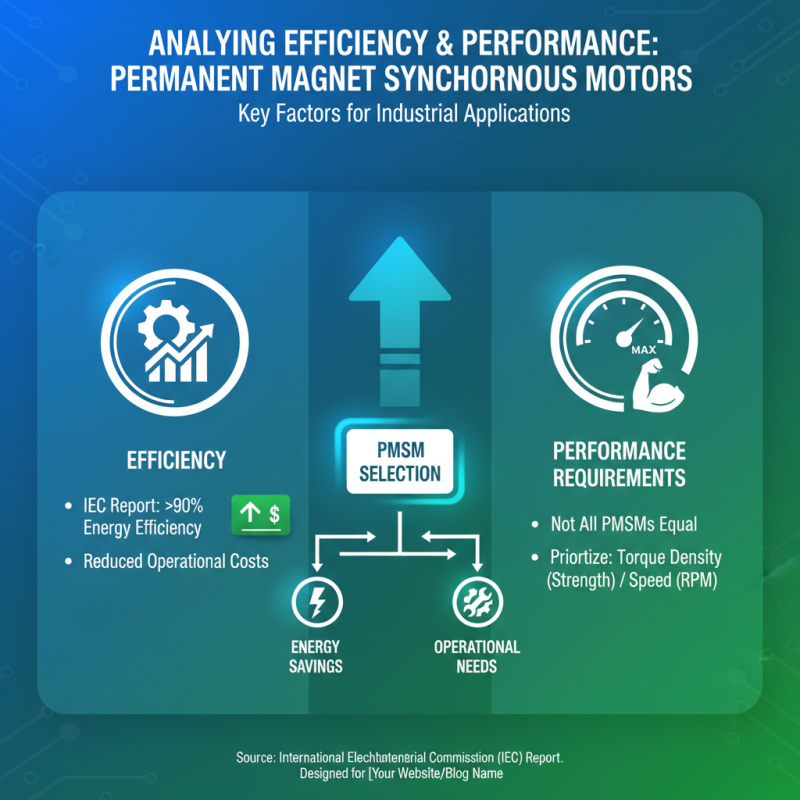
When selecting a permanent magnet synchronous motor (PMSM), understanding its efficiency and performance is crucial. A recent report by the International Electrotechnical Commission (IEC) shows that PMSMs can achieve energy efficiencies above 90%. This high efficiency often leads to reduced operational costs in industrial applications. However, it's essential to analyze specific operational requirements. Not all PMSMs are built the same; some may excel in torque density, while others may prioritize speed.
Performance metrics such as torque ripple and thermal behavior also play significant roles in motor selection. A study from the Electric Power Research Institute indicates that minimizing torque ripple can enhance system performance, especially in precision applications. It's worth noting that while higher efficiency is advantageous, it may come at a higher initial investment. This trade-off may lead to underperformance if not carefully assessed against your operational budget and application needs. Reflecting on the balance between upfront costs and potential savings is vital for making informed decisions.
Assessing Budget and Cost Factors in Motor Selection
When choosing a PM synchronous motor, budget considerations are crucial.
The cost of motors can significantly impact your project's overall financial viability. According to industry reports, motor costs can vary by up to 30% based on specific features and applications. Understanding these variations helps in making informed choices.
Assessing the total cost of ownership is important. Take into account installation, maintenance, and energy consumption. A motor may have a low initial price but high operational costs. Reports suggest energy-efficient motors can save up to 15% in electricity costs over their lifespan. This aspect often outweighs an upfront savings, highlighting the importance of a comprehensive cost analysis.
It is beneficial to gather quotes from multiple suppliers. Don't just focus on the buying price; also ask about warranties and service options. Sometimes, a slightly higher cost might yield better service or reliability, which could prevent future expenses. Transparency in pricing is often a reflection of the supplier’s credibility. Balancing initial costs with long-term benefits is essential for a successful motor selection process.