The Pm Synchronous Motor is a vital component in modern industrial applications. Renowned expert Dr. Emily Chen has said, "Efficiency in electric motors shapes future technologies." Her insight captures the importance of understanding this technology.
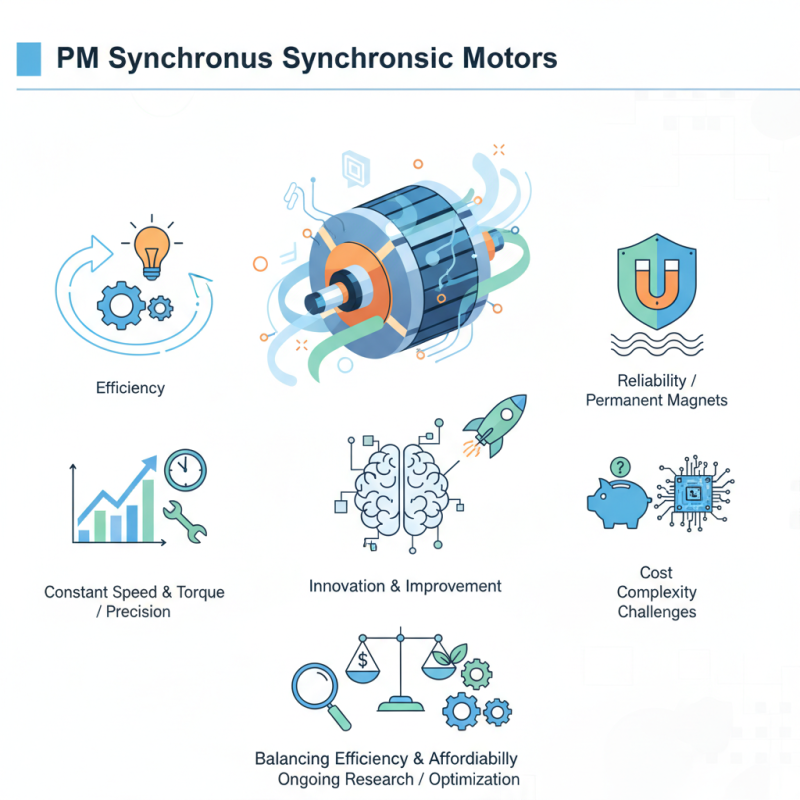
Pm Synchronous Motors operate on principles of electromagnetism. They maintain a constant speed and torque, making them ideal for precise applications. Their design includes permanent magnets, ensuring efficiency and reliability. Despite their advantages, these motors can pose challenges in terms of cost and complexity.
Understanding the Pm Synchronous Motor helps industries innovate and improve performance. Challenges persist in balancing efficiency with affordability. Ongoing research is crucial to address these issues and optimize motor design for various applications.
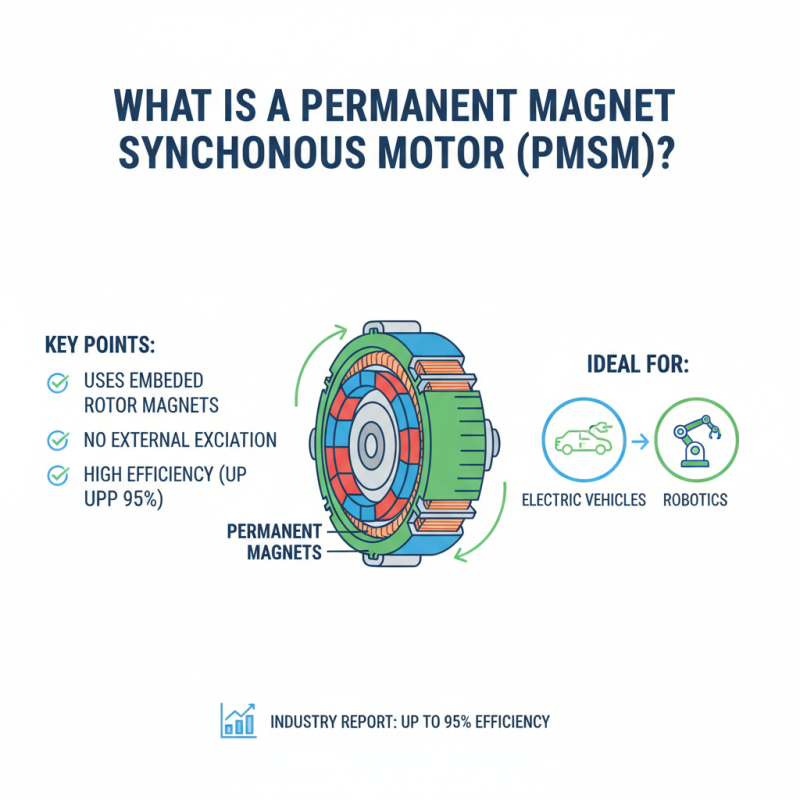
A Permanent Magnet Synchronous Motor (PMSM) uses magnets embedded in the rotor to produce a constant magnetic field. Unlike traditional motors that rely on electromagnets, PMSMs eliminate the need for external excitation, improving efficiency. Industry reports show PMSMs can achieve up to 95% efficiency, making them ideal for electric vehicles and robotics.
The rotor's permanent magnets create a synchronized magnetic field with the stator’s rotating magnetic field. This synchronization ensures smooth rotation and precise control, critical in automation and aerospace applications. However, PMSMs can suffer from demagnetization under high temperatures or excessive current. Designers often add safety margins, but predicting this remains challenging.
Global market analysis predicts the PMSM segment to grow over 8% annually by 2030. This reflects increasing demand for compact, energy-saving motors. Despite strong advantages, PMSMs require sophisticated control electronics, which add cost and complexity. The trade-off between performance and price remains a hurdle for mass adoption in some industries.

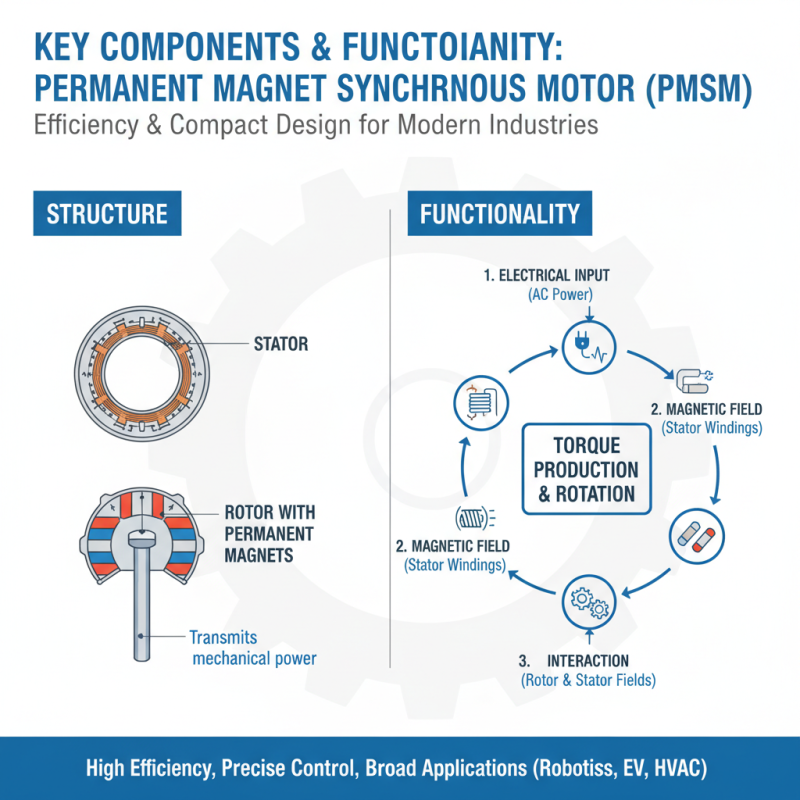
Permanent Magnet Synchronous Motors (PMSM) are widely adopted in various industries due to their efficiency and compact design. Understanding the key components of PMSM is vital for those working in engineering and manufacturing sectors.
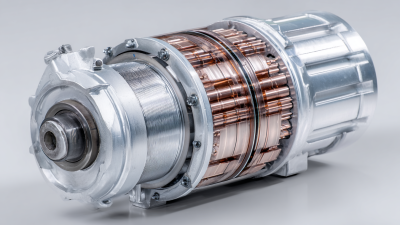
The rotor is one of the crucial components. It is embedded with permanent magnets, which produce a strong magnetic field. This design minimizes losses and enhances efficiency. According to a report by the International Energy Agency, using PMSM can improve energy efficiency by up to 15% compared to traditional motors. The stator, another essential part, comprises windings that create a rotating magnetic field when supplied with AC power. This interaction between rotor and stator generates motion, allowing the motor to function optimally.
Tip: Ensure that the integration of PMSM in applications considers both thermal management and load conditions to avoid premature failure.
Another important aspect is the motor controller. It regulates the power supplied to the motor, adjusting performance based on real-time demand. These controllers often feature advanced algorithms and require a deep understanding of motor dynamics. Interestingly, some engineers face challenges in tuning this controller effectively, sometimes leading to inefficiencies. A recent survey indicated that about 30% of motor failures stem from improper controller settings.
Tip: Regular maintenance and performance evaluation of the motor and controller can significantly extend operational life and reliability.
Permanent Magnet Synchronous Motors (PMSMs) are increasingly popular in various industries due to their efficiency and reliability. These motors operate based on the principle of electromagnetic induction. The rotor contains permanent magnets, which interact with the stator's magnetic fields generated by an AC power supply. This interaction creates rotational motion, making PMSMs highly effective in applications requiring precise control and torque. According to a report by Research and Markets, the global PMSM market is expected to grow significantly, with a projected CAGR of over 9% by 2027.
One key aspect of PMSMs is their lower energy consumption compared to traditional induction motors. They achieve efficiencies of around 95% or more under optimal conditions. However, environmental factors and installation quality can impact performance. A study highlighted that improper alignment can lead to a 15% drop in efficiency. Users should also be aware of the challenges in controlling these motors under varying loads. The need for sophisticated control systems can complicate their implementation. Despite these challenges, the advantages often outweigh the drawbacks, especially for automation and robotics applications.
Permanent Magnet Synchronous Motors (PMSMs) are gaining popularity in industrial applications. They offer several advantages over traditional induction motors. One key benefit is their efficiency. PMSMs can achieve higher efficiency ratings, often exceeding 90%. This leads to significant energy savings in large-scale operations.
Another advantage is the compact design of PMSMs. These motors can deliver high power in a smaller form factor. This allows for more straightforward integration into machinery without taking up excessive space. Their smooth operation and low noise also make them ideal for sensitive applications, such as robotics and conveyor systems.
However, there are challenges with PMSMs. The reliance on permanent magnets can make them costly. Additionally, their performance can be affected by temperature variations. Not all industries can justify the initial investment. When considering PMSMs, it is vital to weigh these factors against the potential for long-term savings and benefits.
Recent advancements in Permanent Magnet Synchronous Motor (PMSM) technology have been remarkable. Improvements in materials and designs are enhancing motor efficiency and performance. New approaches in magnet design reduce costs while increasing output. These innovations are vital for industries aiming for energy efficiency and lower operational costs.
Tips: When considering PMSM for your projects, evaluate the specific needs of your application. Pay attention to motor size and compatibility with existing systems. This will save time and resources.
Another significant trend is the integration of smart technologies with PMSMs. IoT (Internet of Things) applications allow real-time monitoring and diagnostics. This enhances maintenance strategies and minimizes downtime. However, reliance on technology can create vulnerabilities. It's essential to plan for these challenges.
Tips: Stay informed about cybersecurity risks associated with smart connections. Regular software updates and thorough training can mitigate potential threats.
The future of PMSM technology seems promising. Research continues to focus on enhancing efficiency and sustainability. Yet, as improvements arise, manufacturers must address the potential for over-reliance on new technologies. Balancing innovation with traditional practices could lead to more resilient and effective solutions.
| Feature | Description | Recent Advancements | Future Trends |
|---|---|---|---|
| Motor Type | Permanent Magnet Synchronous Motor (PMSM) | Increased efficiency with advanced magnet materials | Integration with IoT for real-time monitoring |
| Operating Principle | Operates based on magnetic field interaction between stator and rotor | Improved models for higher torque density | Development of sensors for dynamic performance |
| Applications | Used in electric vehicles, robotics, and industrial automation | Widespread adoption in renewable energy systems | Advancement in transportation and aerospace applications |
| Advantages | High efficiency, compact size, and low maintenance | Enhanced thermal management technologies | Broader use of AI for optimal performance |
| Challenges | High cost of permanent magnetic materials | Research on alternative magnetic materials | Focus on sustainability and resource availability |