What is a Jaw Crusher and How Does It Work?
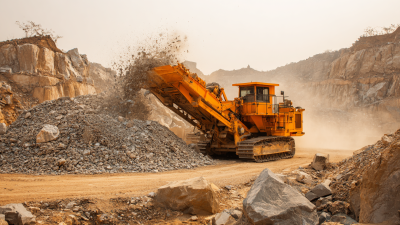
A Jaw Crusher is a crucial piece of equipment in the mining and construction industries. It excels at breaking down large rocks into manageable sizes. By applying compressive force, the Jaw Crusher reduces materials efficiently. This machine's design often includes two opposing jaws. These jaws work together to crush materials between them.
Understanding how a Jaw Crusher operates is vital for professionals in these fields. It involves a simple yet effective mechanism. The top jaw moves, creating a gap for rocks to enter. When the gap closes, the rocks are crushed. Each cycle of this process generates the potential for refinement. However, challenges can arise regarding maintenance and operational efficiency.
A well-maintained Jaw Crusher enhances productivity. Nevertheless, common issues may arise during operation. Cracks in the jaws or misalignment can lead to inefficiencies. Operators must be vigilant and address these problems promptly. This awareness can mean the difference between consistent output and costly downtime.
What is a Jaw Crusher?
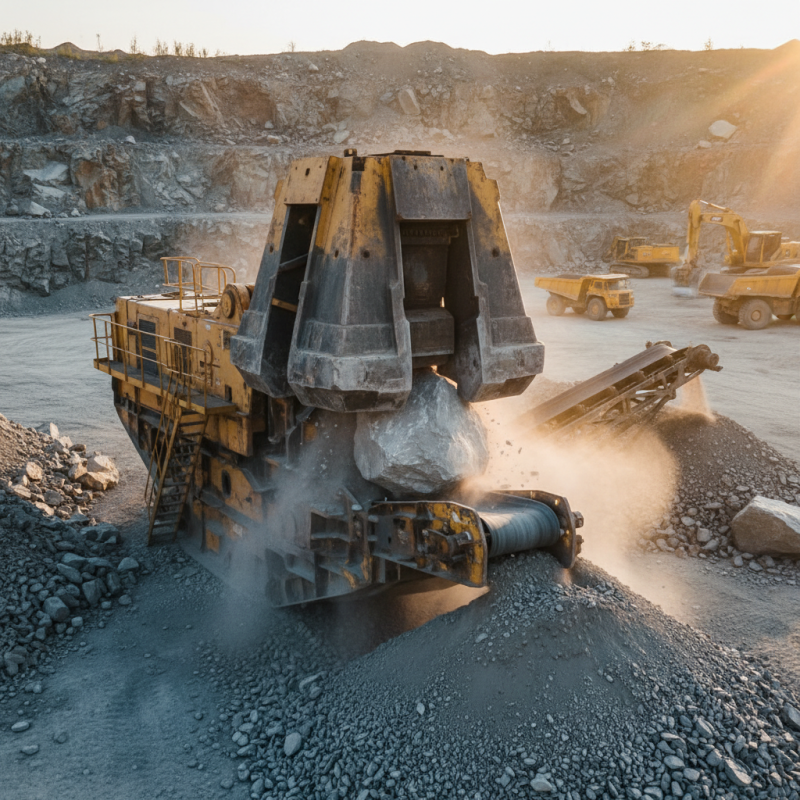
A jaw crusher is a fundamental piece of equipment in the mining and aggregate industries. It is primarily used for crushing large rocks into smaller, manageable pieces. The design features two jaws, one fixed and one moving, which create a V-shaped cavity. As the moving jaw moves, it compresses material against the fixed jaw, breaking it apart. This mechanism is efficient and widely used, accounting for around 30% of the global market in rock crushing machinery.
Data from industry reports indicate that the jaw crusher market is projected to grow significantly. By 2025, it is expected to reach USD 1.8 billion, reflecting the rising demand for these machines in construction and mining sectors. A well-designed jaw crusher can handle hard rocks with compressive strength up to 320 MPa. However, operators often overlook maintenance, leading to inefficiencies. Regular inspections and timely replacements of critical components can dramatically enhance performance.
Despite its effectiveness, there are limitations. Jaw crushers can be less efficient with softer materials. Furthermore, they may produce uneven particle sizes. This inconsistency can be problematic for specific applications, necessitating additional processing steps. As the market evolves, addressing these challenges will be crucial for optimizing crushing operations. Investing in research and development can lead to innovative solutions, ensuring these machines meet modern demands effectively.
Historical Development of Jaw Crushers
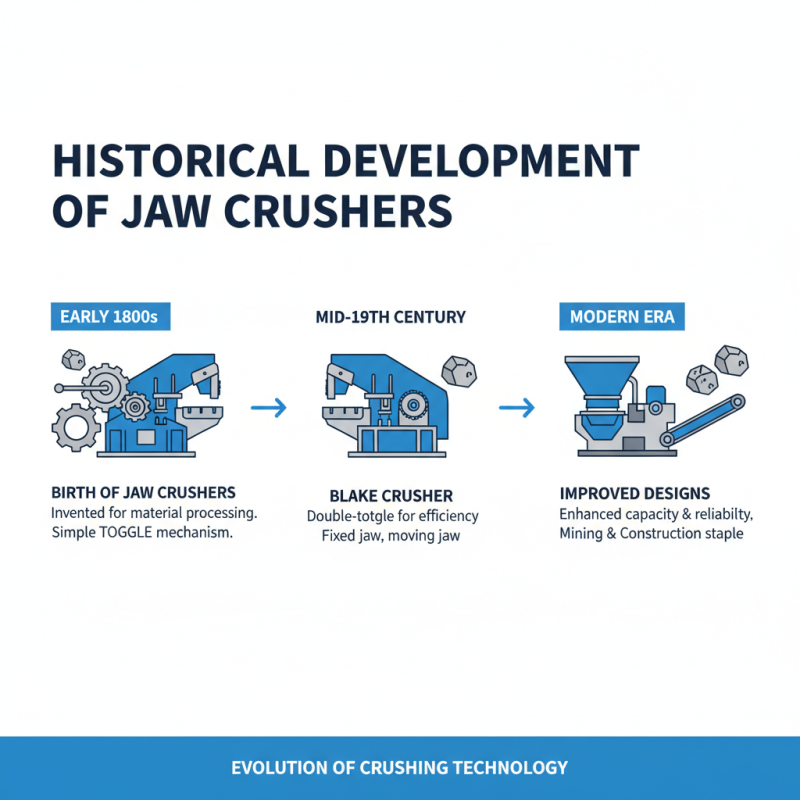
Jaw crushers have a rich history that traces back to the early 19th century. Invented to handle the rising need for efficient material processing, they marked a significant step in mining and construction. The first design featured a simple toggle mechanism. It powered the crushing action, allowing operators to break down large rocks into manageable sizes.
Over the decades, jaw crushers evolved in design and functionality. Early models used manual labor, which limited efficiency. As technology progressed, hydraulic and electric-powered versions emerged. These improvements enhanced productivity. They allowed for processing of hard materials. However, older designs often faced issues with wear and tear.
The evolution of jaw crushers highlights the constant push for innovation in mining and construction. Even today, engineers are refining these machines. They aim for greater efficiency and reliability. Yet, challenges remain with maintenance and operational costs. This history illustrates the dynamic needs of the industry. Each advancement builds on past lessons.
Basic Components of a Jaw Crusher
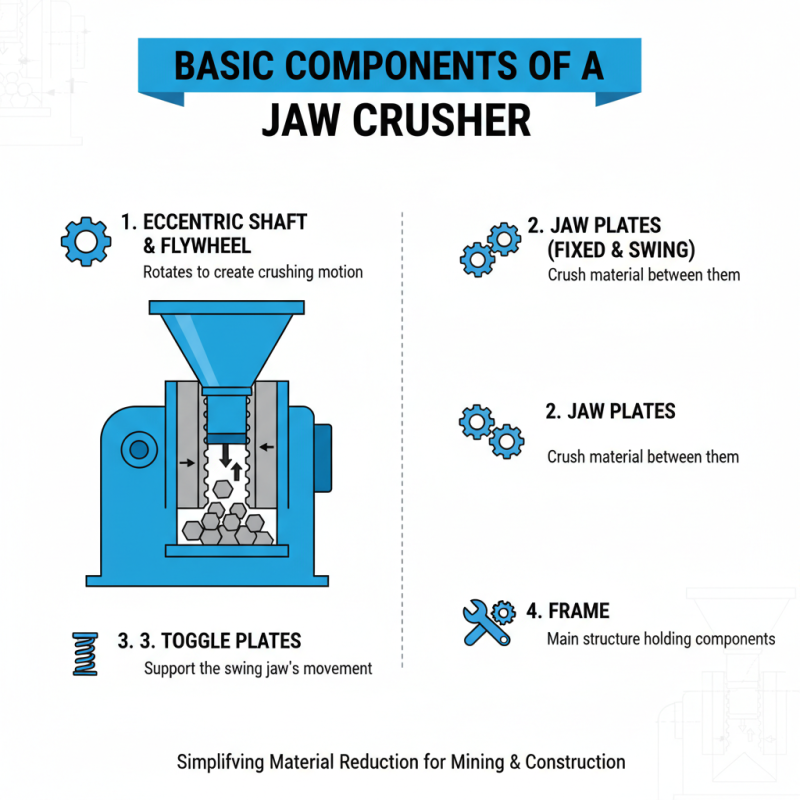
Jaw crushers are essential for many industries, including mining and construction. They are designed to break down large materials into smaller pieces, facilitating easier handling. Understanding the basic components of a jaw crusher can improve its operation and maintenance.
The main parts of a jaw crusher include the jaw plates, the frame, and the toggle mechanism. Jaw plates are critical in crushing materials. They are usually made of hardened steel for durability. The frame supports the structure and provides stability during crushing operations. The toggle mechanism plays a significant role in the movement of the jaw plates, allowing for efficient crushing.
Tips: Regular maintenance is crucial. Inspect jaw plates for wear and replace them when necessary. Proper lubrication of the toggle mechanism can enhance its lifespan.
Another component is the discharge area, where crushed material exits. If this area becomes clogged, crushing efficiency decreases. It's essential to keep it clear to avoid downtime. According to industry reports, a well-maintained jaw crusher can achieve a throughput of up to 1,500 tons per hour. This statistic highlights the importance of proper operation and timely maintenance.
How Jaw Crushers Operate: Mechanism and Process
Jaw crushers are vital in mining and construction. Understanding how they operate reveals their importance in material processing. The mechanism of a jaw crusher involves two plates, known as the jaws. One is fixed, and the other moves back and forth. This movement crushes the material into smaller pieces, facilitating further processing.
The process begins when large rocks enter the crusher’s feed opening. As the movable jaw approaches the fixed jaw, the material is crushed. It is then discharged at the bottom once it reaches the desired size. This cycle—intake, crushing, and discharge—repeats continuously. The energy required for this process comes from a motor that powers the jaws.
While effective, the design can sometimes lead to uneven wear on the jaws. Operators need to monitor the wear patterns closely. Regular maintenance is also crucial to prevent breakdowns. Without it, efficiency decreases, potentially leading to costly downtime. Understanding these nuances helps in optimizing performance.
What is a Jaw Crusher and How Does It Work?
| Feature |
Description |
Benefits |
| Crushing Mechanism |
Utilizes a movable jaw and a fixed jaw to crush material. |
Efficient material size reduction. |
| Operating Principle |
The jaws move in a reciprocating motion to crush materials. |
Provides continuous feed and high throughput. |
| Material Types |
Can crush various materials like rock, ore, and gravel. |
Versatile and adaptable for different industries. |
| Maintenance |
Requires regular checks and replacement of wear parts. |
Enhances longevity and operational efficiency. |
| Applications |
Used in mining, construction, and recycling industries. |
Facilitates various processing needs for different sectors. |
Applications and Benefits of Using Jaw Crushers
Jaw crushers are essential tools in various industries. Their primary purpose is crushing large rocks into smaller, manageable pieces. This process is vital in mining, construction, and recycling. A jaw crusher’s design allows for powerful crushing forces, leading to efficient material size reduction. The unique structure includes a fixed and a movable jaw, which work together to break down materials.
In mining and construction, jaw crushers help ensure materials are suitable for further processing. They crush materials like granite, limestone, and concrete effectively. The resulting crushed materials can be used in asphalt, road base, or building foundations. Additionally, their ability to handle tough materials makes them important in recycling operations. They help reduce waste by turning old concrete and asphalt into reusable aggregates.
However, there are challenges. Jaw crushers can sometimes produce uneven sizes. This inconsistency can affect downstream processes. Maintenance is crucial, as wear and tear can lead to inefficiencies. Operators must regularly inspect and replace parts to maintain performance. Keeping these points in mind is essential for maximizing the effectiveness of jaw crushers in various applications.