How to Choose the Right Jaw Crusher for Your Business?
Choosing the right Jaw Crusher can significantly impact your business's efficiency and profitability. This decision requires careful consideration of various factors, such as material type and production capacity. A suitable Jaw Crusher increases productivity and reduces operational costs. However, the overwhelming number of options can complicate the selection process.
Every Jaw Crusher has unique specifications and capabilities. Understanding your needs is crucial. You may find that what works for one operation might not work for yours. It's essential to analyze your business requirements closely. Inconsistencies in performance can lead to frustration. Finding a reliable supplier with a proven track record can provide guidance and assistance.
Experience plays a vital role when selecting a Jaw Crusher. Consulting industry experts helps clarify your needs. Quality equipment enhances performance, boosting your bottom line. Take your time to evaluate your choices. This decision deserves thorough consideration, as it will affect your operations for years. Make the right choice, and ensure your Jaw Crusher aligns with your goals.
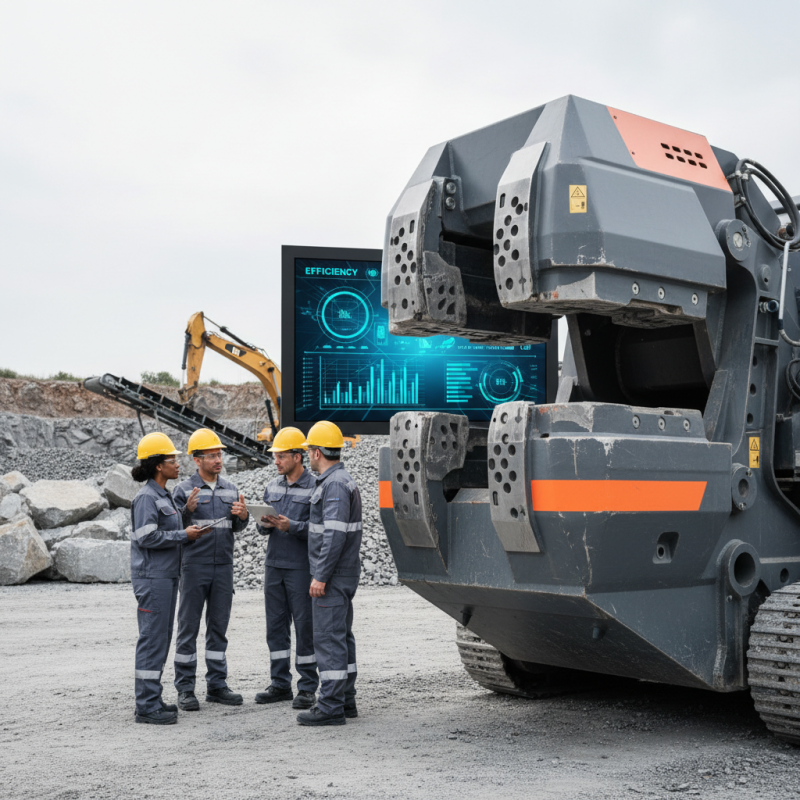
Understanding the Different Types of Jaw Crushers Available
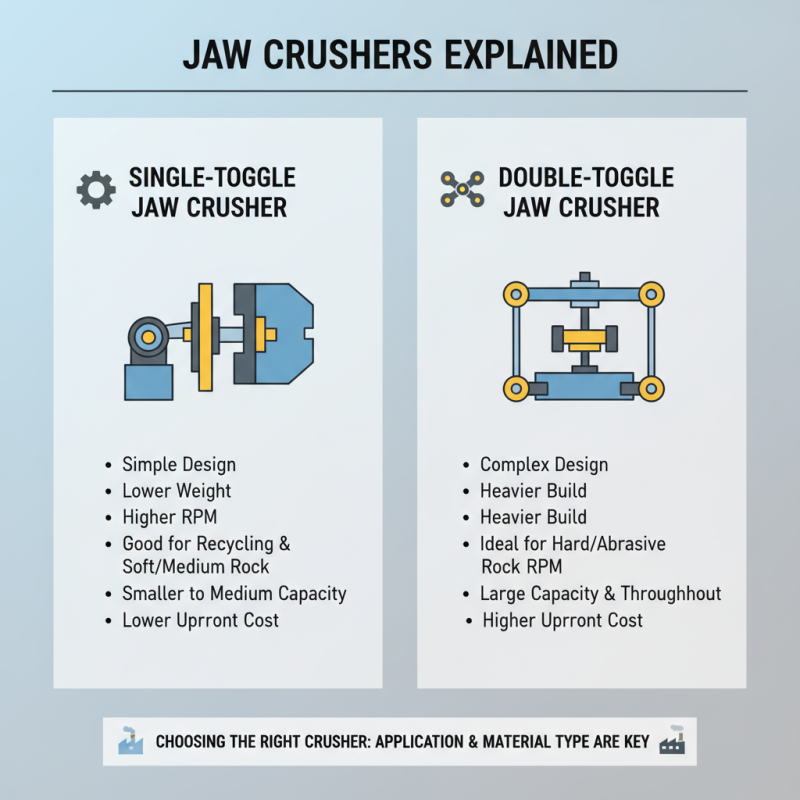
Choosing the right jaw crusher requires understanding the various types available. Each type is designed for specific applications and material handling. For instance, the two most common types are the single-toggle jaw crusher and the double-toggle jaw crusher. The single-toggle design is more efficient for smaller operations, while the double-toggle offers higher throughput for larger tasks.
In recent industry reports, it's highlighted that approximately 65% of projects prefer single-toggle crushers. This is due to their lower operating costs and maintenance needs. On the other hand, double-toggle units are recognized for their robustness, suitable for breaking down very hard materials. Their design allows for larger throw, making them ideal for high-volume production.
Careful consideration of material characteristics is crucial. For example, if dealing with abrasive materials, a more durable jaw plate is necessary. The weight and power of the crusher affect its ability to handle specific loads efficiently. Opting for an undersized machine could lead to premature wear or failures. Additionally, understanding the local market demands and material specifications can guide you towards a well-suited choice.
Key Factors to Consider When Selecting a Jaw Crusher
Selecting the right jaw crusher is crucial for your business operations. Consider the material you will be processing. Different materials have varying hardness and abrasiveness. Soft rocks like limestone require less powerful machines, while hard materials, such as granite, need robust crushers with larger capacities.
Another key factor is the size of the feed opening. A larger opening allows for bigger input materials. However, this may lead to higher operational costs. Energy efficiency is also important. A machine that consumes less power can reduce your long-term expenses. Pay attention to the crusher's overall design and ease of maintenance. Complex machines can result in higher downtime and increased repair costs.
Take into account your production requirements. Understand how much output you need daily. It's not just about picking the biggest machine. A crusher that suits your output needs can often be more efficient and cost-effective. Different models may have various features, but without evaluating your unique business needs, you risk making an unsuitable investment.
Assessing Your Material and Production Requirements
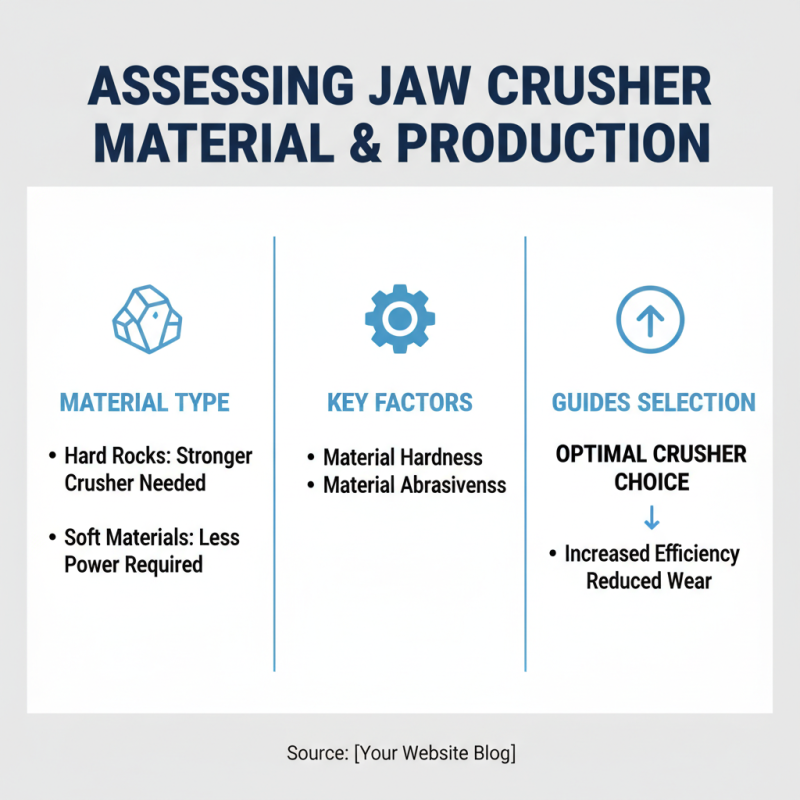
When choosing a jaw crusher, understanding your material is crucial. Different materials require unique handling. For instance, harder rocks need a stronger crusher. Soft materials may require less power. Assessing the material's hardness and abrasiveness will guide your selection process.
Consider the size and shape of the material as well. Jaw crushers have various feed openings and capacities. If you're processing large boulders, a larger feed opening is essential. For smaller materials, a narrower opening may suffice. This impacts not just efficiency but also the overall productivity of your operations.
Now, think about your production goals. Are you aiming for high volume or specific size reduction? Depending on your target, you may need a different style of jaw crusher. Having a clear vision of your production needs will help refine your choice. It's advisable to conduct trials on your material with potential crusher models. Not all crushers perform equally with every type of material. Understanding these nuances can prevent costly mistakes in the long run.
Evaluating Budget and Cost-Effectiveness for Your Business
When evaluating budget and cost-effectiveness for a jaw crusher in your business, several factors come into play. The initial capital investment is crucial. Industry reports indicate that high-quality jaw crushers can range from $30,000 to $150,000 depending on size and features. Cheaper models may save money upfront but can lead to higher operational costs over time. Maintenance and repair costs also affect your bottom line.
Operational efficiency is another key consideration. A high-efficiency jaw crusher can process up to 80 tons of material per hour. In contrast, a lower-efficiency model might only manage 50 tons, resulting in more downtime. This inefficiency can lead to lost revenue. Careful analysis of material requirements can help optimize your choice. Consider your operational scale. A small setup may benefit from a smaller unit with lower costs, while a larger operation could justify the higher investment for better performance.
Additionally, assess the total cost of ownership (TCO). TCO includes purchase price, maintenance, and operational costs over the equipment's lifespan. Reportedly, TCO can sometimes exceed the purchase price by threefold over five years. This data underscores the importance of a well-informed decision. Balancing cost against expected output is essential for sustainable growth in your business.
How to Choose the Right Jaw Crusher for Your Business?
| Model |
Capacity (Tons/Hour) |
Power (hp) |
Cost ($) |
Operating Cost/Hour ($) |
| JC-150 |
30 |
100 |
25,000 |
15 |
| JC-200 |
50 |
150 |
30,000 |
20 |
| JC-300 |
75 |
200 |
50,000 |
30 |
| JC-400 |
100 |
250 |
75,000 |
40 |
Choosing the Right Features and Specifications for Your Needs
Choosing the right jaw crusher involves understanding its features and specifications. Different models cater to various crushing needs. A critical factor is the feed size. Jaw crushers can handle feed sizes from as small as 1 inch to over 48 inches, depending on the design. Your application will dictate which size is optimal. Reports indicate that feed size impacts the overall efficiency, influenced by an ideal reduction ratio of 4:1 to 6:1.
Another essential aspect is the material type you're crushing. Harder materials require more robust construction. Many crushing operations prefer models with added wear liners, extending the lifespan of the machine. Research shows that users can increase productivity by choosing crushers with features like hydraulic adjustments or advanced automation. This ensures consistent performance and reduces downtime, a critical consideration for maintaining operational efficiency.
It's also worth noting the power consumption of the jaw crusher. Some models consume over 200 kW, affecting operational costs. It's crucial to balance efficiency with energy use. Overlooking power specifications may lead to unexpected expenses. A systematic evaluation of total cost of ownership can uncover potential issues. Crafting the ideal setup involves careful consideration of various factors tailored to your operations.
How to Choose the Right Jaw Crusher for Your Business?