What Is the Best Cone Crusher from China?
What Is the Best Cone Crusher from China? The answer depends on your material, capacity, and operating conditions. A machine crushing granite requires different priorities than one processing limestone. Feed size, closed-side setting, liner design, and motor power all influence daily performance. The cheapest quotation rarely tells the complete story.
This guide examines Chinese Cone Crusher manufacturers through practical and technical criteria. These include crushing efficiency, structural strength, automation, maintenance access, spare-part availability, and service support. Experienced buyers should request test results, production data, inspection records, and clear warranty terms. A factory visit can reveal important details. Look closely at weld quality, machining accuracy, hydraulic fittings, and assembly discipline. Small details matter.
Reliable manufacturers should explain how their equipment performs under real workloads, not only display polished brochures. Independent certifications, export experience, and customer references can strengthen confidence. However, certificates do not replace field evidence. Some suppliers communicate well but provide limited technical depth. Others build solid machines but respond slowly after delivery. That trade-off deserves attention.
No single model is best for every quarry. I may favor a robust design today, then reconsider after reviewing abrasive stone, electricity costs, and local technicians. This is where many comparisons become too simple. The right choice balances purchase price, lifetime operating cost, uptime, and support. The following discussion compares leading Chinese options with practical judgment, measurable criteria, and realistic expectations. Mistakes remain possible. Careful verification reduces them.
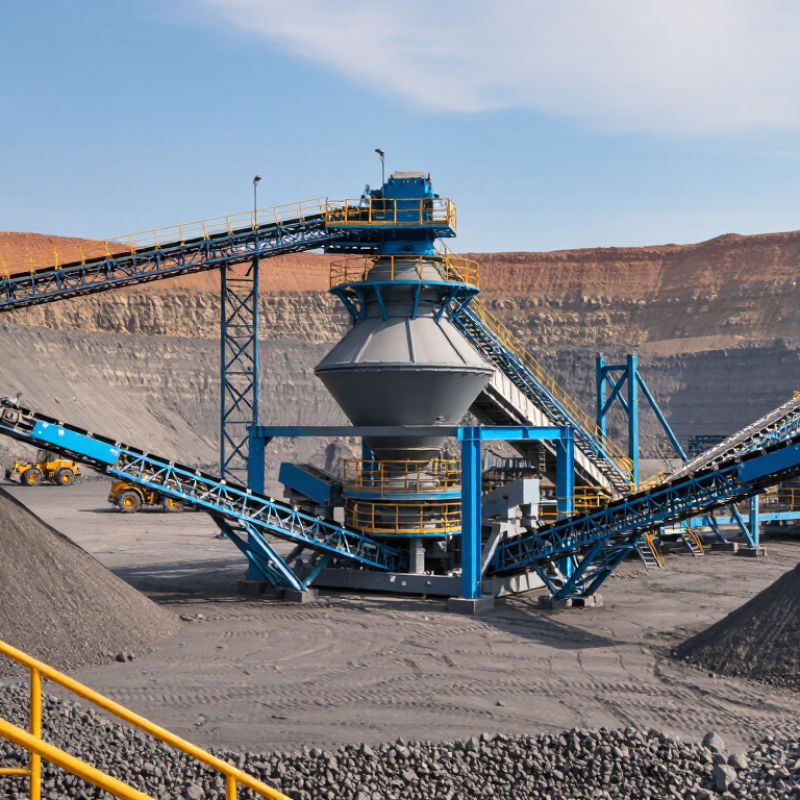
What Defines a High-Quality Cone Crusher from China?
A high-quality cone crusher from China is defined by measurable performance, not a polished catalogue. In field inspections, I look for a rigid main frame, accurate machining, stable hydraulic protection, and accessible wear-part adjustment. These details control product shape, downtime, and operator safety. The U.S. Geological Survey’s Mineral Commodity Summaries 2024 reported about 1.9 billion metric tons of crushed stone produced in the United States during 2023. Such volume makes reliability more valuable than a low purchase price.
A dependable machine should maintain a consistent closed-side setting under changing feed conditions. Its lubrication system needs temperature monitoring, filtration, and clear alarm signals. Ask for test records covering vibration, oil cleanliness, throughput, and power draw. ISO 9001 certification supports process control, but it does not prove crusher performance by itself. Independent factory audits and site references matter more. I would also examine weld quality and bearing documentation. These are easy to overlook. They should not be.
Tips:
Request a sample crushing test using your actual feed size and hardness. Compare the final product curve, not only hourly capacity. Check whether replacement mantles and concaves are dimensionally verified. Ask how quickly technical support can respond. A promising quotation may still hide uncertain lead times, weak documentation, or inconsistent wear life. This is where careful judgment remains necessary, even when the specifications look impressive.
Which Cone Crusher Types Are Available from Chinese Manufacturers?
Chinese manufacturers commonly offer four cone crusher types: spring, compound, single-cylinder hydraulic, and multi-cylinder hydraulic models.
Spring designs suit secondary crushing with moderate budgets and simpler maintenance. Compound crushers combine crushing and shaping, making them practical for small and medium aggregate plants. Single-cylinder hydraulic machines provide easier chamber adjustment and overload protection. Multi-cylinder hydraulic models deliver higher pressure for hard, abrasive stone and finer product control.
According to Grand View Research’s 2024 Cone Crusher Market report, the global market was valued at approximately US$1.8 billion in 2023. It is expected to grow at about 5.6% annually through 2030. The USGS Mineral Commodity Summaries 2024 reported roughly 1.5 billion metric tons of crushed stone production in the United States during 2023. These figures show why capacity, wear life, and product shape matter in real quarry conditions. Still, market growth does not identify the best machine.
In field selection, feed size, moisture, rock abrasiveness, and target output should guide the decision.
A multi-cylinder model may be excessive for soft limestone. A spring crusher may struggle with constant hard granite. I would check liner consumption, hydraulic response, test-run results, and spare-part availability before comparing prices. Specifications can look impressive. They can still mislead.
One practical weakness remains: published capacity often assumes ideal feed and stable operation, which many sites never achieve.
How to Compare Performance, Capacity, and Energy Efficiency
Choosing the best cone crusher from China requires comparable evidence, not a low purchase price.
USGS Mineral Commodity Summaries 2024 estimated U.S. crushed stone production at about 1.5 billion metric tons in 2023. That scale makes small efficiency differences financially important. Compare machines using the same feed size, rock hardness, closed-side setting, and target product curve. Otherwise, capacity figures can mislead.
Look at tonnes per hour at a defined CSS, not the catalogue maximum. Request test data showing feed gradation, P80, circulating load, liner condition, and actual power draw.
In practice, a stable product curve matters more than a short, impressive test result. Check whether the frame handles tramp iron and whether the hydraulic relief system resets consistently. These details often reveal manufacturing discipline.
Energy efficiency should be reported in kWh per tonne. The U.S. Department of Energy’s Mining Industry Energy Bandwidth Study identifies comminution as a major energy-consuming stage, so motor size alone proves little. Compare measured power at equal throughput and product size.
A crusher using 0.8 kWh/t may outperform one using 1.0 kWh/t, but only under matching conditions.
Ask for a witnessed trial and verify the meter calibration. I would also inspect three months of operating records.
One uncomfortable truth: published capacity can be optimistic, especially with wet, sticky feed.
What Safety and Maintenance Features Should Buyers Check?
What Is the Best Cone Crusher from China?
When comparing a cone crusher from China, safety and maintenance deserve more attention than capacity alone. A strong machine should have guarded moving parts, clear warning labels, and reachable emergency-stop buttons. Check whether the hydraulic system releases safely during an uncrushable event. This feature can protect the frame, liner, and drive components from severe damage.
Access matters every day. Inspect the platform, handrails, inspection doors, and lifting points before purchase. Good maintenance design reduces climbing, awkward lifting, and unnecessary exposure to dust. Check the lubrication system, oil-temperature alarms, pressure sensors, and automatic shutdown functions. The control panel should show faults clearly, not hide them behind confusing codes. In field inspections, small design details often decide whether maintenance takes thirty minutes or half a shift. No checklist is perfect.
Tips: Ask for a maintenance schedule, operating manual, spare-parts list, and real service records. Confirm that wear liners can be replaced without unsafe improvisation. Test the emergency stop and interlock functions during acceptance, if possible. Keep lockout procedures visible near the machine. Also inspect dust suppression and noise controls, especially in enclosed plants. A cheaper crusher may still cost more when access is poor, sensors fail, or basic parts arrive late. That risk is easy to underestimate.
What Is the Best Cone Crusher from China? What Safety and Maintenance Features Should Buyers Check?
This buyer checklist groups the key verification points for a cone crusher. The values represent the number of practical checks in each category, not a comparison of companies or brands.
Safety: Check guarding, emergency stops, lockout/tagout access, and tramp-release or overload protection. Lubrication: Verify oil-pressure and temperature alarms, filtration, cooling, and automatic lubrication options. Hydraulic adjustment: Confirm hydraulic setting control, accumulator protection, and pressure monitoring. Wear monitoring: Request liner-wear indicators, chamber inspection access, and clear replacement limits. Service access: Check lifting points, maintenance platforms, inspection doors, and documented service intervals.
How to Select a Reliable Chinese Cone Crusher Supplier
What Is the Best Cone Crusher from China?
How to Select a Reliable Chinese Cone Crusher Supplier
The best cone crusher is not chosen by price alone. It must match your ore, feed size, capacity, and required product shape. A reliable supplier should explain these choices clearly. Ask for the crushing chamber drawing, rated power, closed-side setting range, and expected output. Vague answers deserve caution.
Inspect the manufacturer’s technical experience. Request factory photographs, production records, material certificates, and performance data from similar projects. Check whether key parts, such as the mantle, bowl liner, main shaft, and hydraulic system, are produced under controlled standards. A polished website is not proof. A real factory audit is stronger. If possible, speak with current users in comparable mining or aggregate conditions.
After-sales support often decides the purchase. Confirm spare-parts availability, installation guidance, response time, warranty terms, and training arrangements in writing. Ask how the supplier handles abnormal vibration, liner wear, or unstable discharge. These details reveal practical knowledge. Do not ignore small gaps in the proposal; they can become expensive delays. My own judgment would remain cautious when test data lacks operating conditions. Capacity figures without feed hardness, moisture, and discharge settings may look precise but remain incomplete. Select a supplier willing to discuss limitations, not one promising perfect results.